Local Marketing 6 min read
Where Can You Put Yard Signs? The Best Legal Spots (and the Rules)
The best places to put business yard signs, how to spot the public right-of-way, and the simple rules for customer lawns, HOAs and roadside signs.
The short answer
Put business yard signs on private property, with the owner's permission: customers' lawns during a job, past customers' yards, your own business and partners' properties. Avoid the public right-of-way, which often reaches 8 to 12 feet back from the curb and includes the grass strip, medians and utility poles. Cities remove signs there and can fine you.
There are more good places for a yard sign than most businesses use. The best ones are already offered to you: every customer’s lawn, every happy past customer, your own property and the businesses you work with.
The one place to skip is the one most people try first: the side of the road. Here’s where yard signs work best, how to tell where the road’s land ends, and the simple rules that keep your signs up.
The one rule that covers most of it
Private property, with the owner’s permission. Nearly every sign problem comes from breaking one half of that: putting a sign on land that’s public, or on someone’s property without asking.
Follow it and you’ve got a long list of great spots.
The best legal spots for yard signs
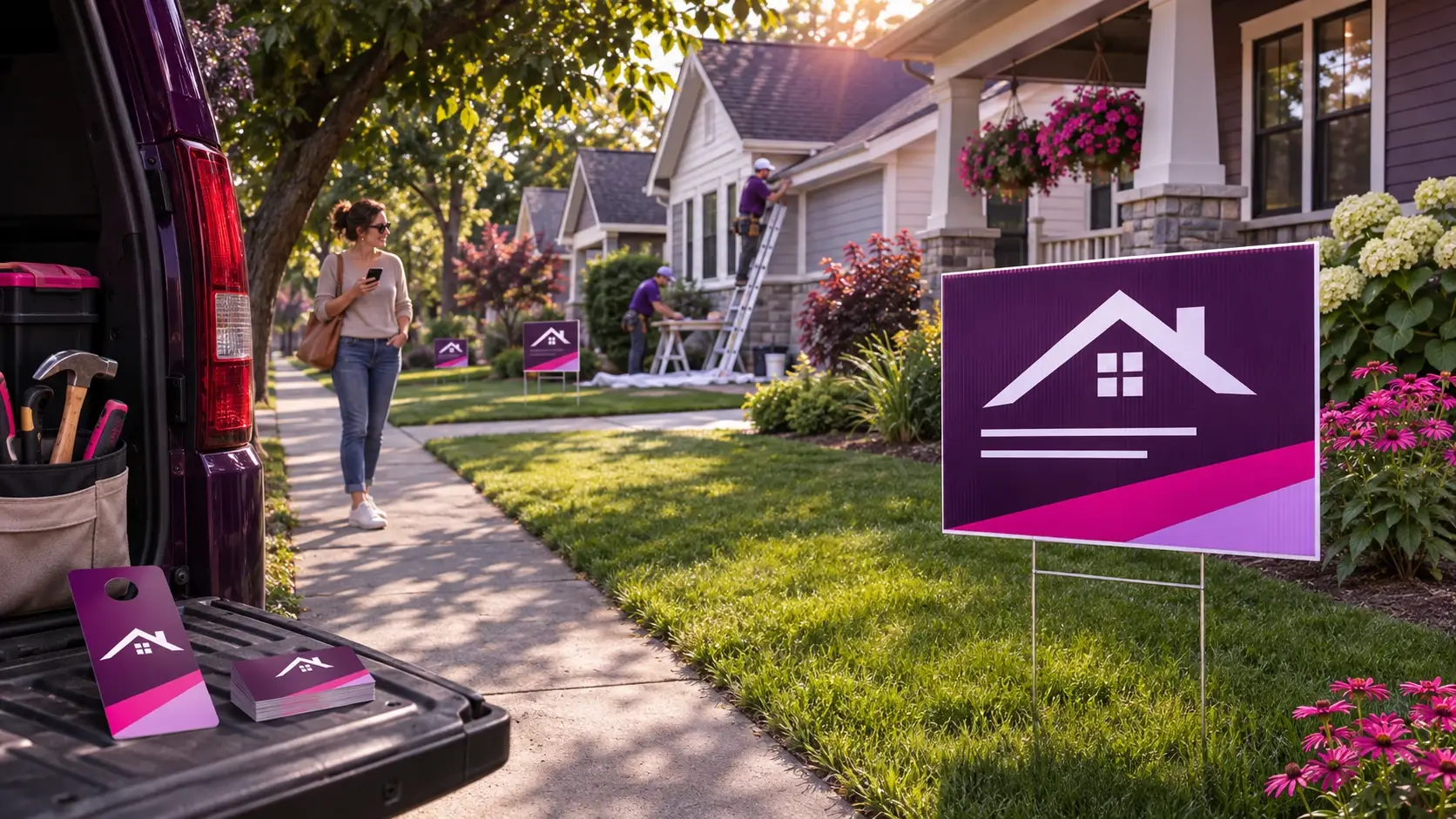
- Your customer’s yard, during the job. The best sign spot there is: neighbors are already watching the work. Ask when the contract is signed.
- Your customer’s yard, right after the job. A “Just finished” sign for a week or two (if your city allows it) shows off the finished work.
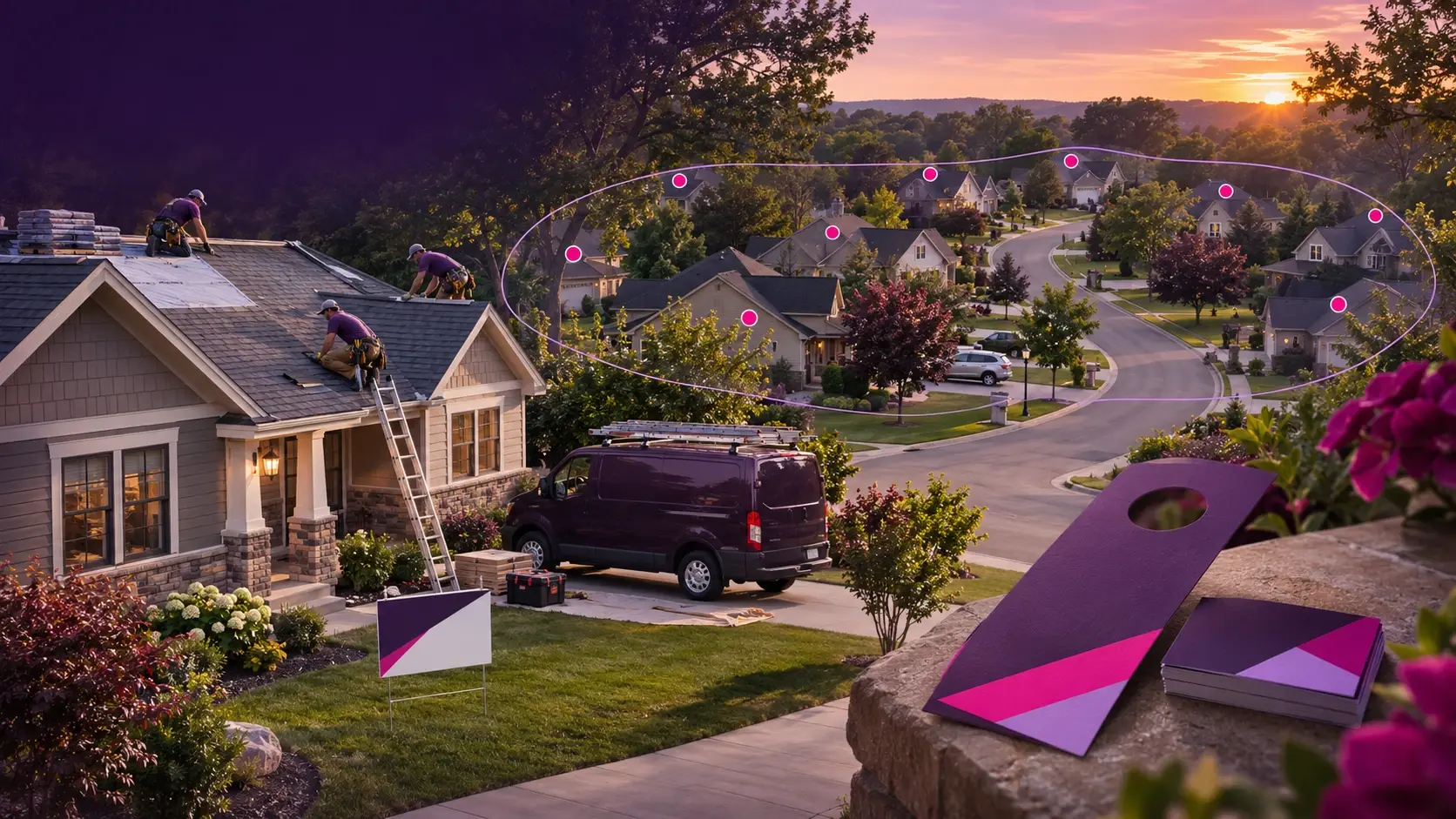
- Past customers’ yards. Happy customers on busy streets are your best sign hosts. Contractors have turned anniversary campaigns in past clients’ yards into dozens of leads (see our yard sign marketing ideas).
- Corner lots, with the owner’s permission. Drivers stop at the corner and read. Two signs, one per street, doubles the audience.
- Your own storefront, office or shop. No one to ask but yourself, though your city may still limit size and number.
- Partner businesses. Swap sign space with a business that serves the same customers: a pool company and a landscaper, a realtor and a mover.
- Sponsor spots. Youth leagues, school boosters and community events often sell or trade sign space at the field or venue.
- Booths and events. Farmers markets, home shows and festivals, at your booth or on the organizer’s approved sign spots.
Notice what all eight have in common: someone who owns the land said yes.
Where is the public right-of-way?
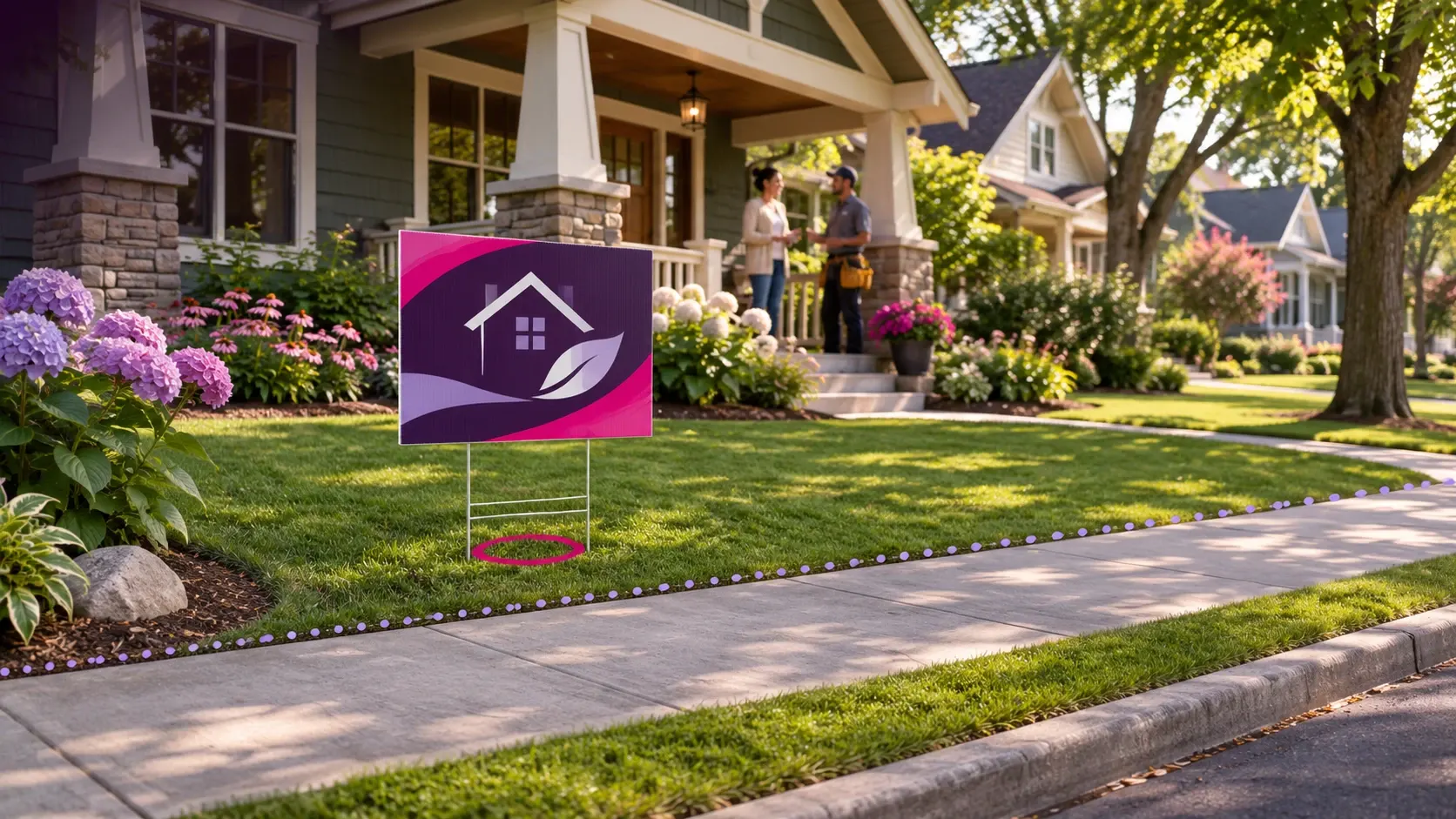
This is where most good-intentioned signs go wrong. The strip of grass along the street looks like the homeowner’s lawn, and they usually mow it, but it’s often public right-of-way: land the city or state owns or controls for roads, sidewalks and utilities.
How far back it goes depends on the place:
- About 10 to 12 feet behind the curb is typical in Livermore, California, according to the city.
- About 8 to 12 feet, from the curb to the property line, is the usual range in Fountain Hills, Arizona.
- Where there’s no sidewalk, Lenexa, Kansas, treats the right-of-way as 11 feet from the back of the curb.
The right-of-way almost always includes:
- the grass strip between the sidewalk and the street,
- the sidewalk itself,
- medians and traffic islands,
- roadside ditches and highway shoulders,
- utility poles, street signs and light posts.
If you want to know exactly where the line is, search for “[your city] right-of-way” or call the public works department. Some cities, like Lenexa, even allow small signs in part of the right-of-way with a setback, which is why it pays to check.
What happens to signs on the side of the road?
Signs placed along roads without permission are called bandit signs, and states and cities clean them out regularly:
- Wisconsin law prohibits businesses from placing advertising signs in highway right-of-way.
- Maryland’s State Highway Administration and local governments can remove unauthorized signs, and local governments can collect a civil penalty of up to $25 per commercial sign.
Twenty-five dollars a sign adds up quickly for a campaign of 50 signs. And the bigger cost is reputation: a sign zip-tied to a pole at an intersection looks fly-by-night, which is the opposite of what you want neighbors to think.
Putting signs in customers’ yards
The customer’s lawn is your best sign spot, and most cities are fine with it, often with a time limit:
- Some cities allow contractor signs only while the work is in progress. Hillside, Illinois, is one example.
- Others allow a sign during construction and for a set time after, such as 30 days.
- Some limit size or number of signs per property.
A few habits keep it easy:
- Ask in writing. A line in your contract or estimate (“May we place a yard sign during the project?”) makes it routine.
- Place it on their side of the sidewalk, not in the grass strip.
- Take it down on time. Pick it up on the agreed date. A sign that sits too long annoys the homeowner and the neighbors.
What about HOAs?
Homeowners associations have their own rules, and many restrict commercial signs even where the city allows them. Before you put a sign in an HOA neighborhood:
- Ask your customer whether the HOA allows contractor signs. They have the rules, and they’ll get the letter if there’s a problem.
- Ask for permission if the rules are unclear. Some HOAs allow signs during a job if you ask.
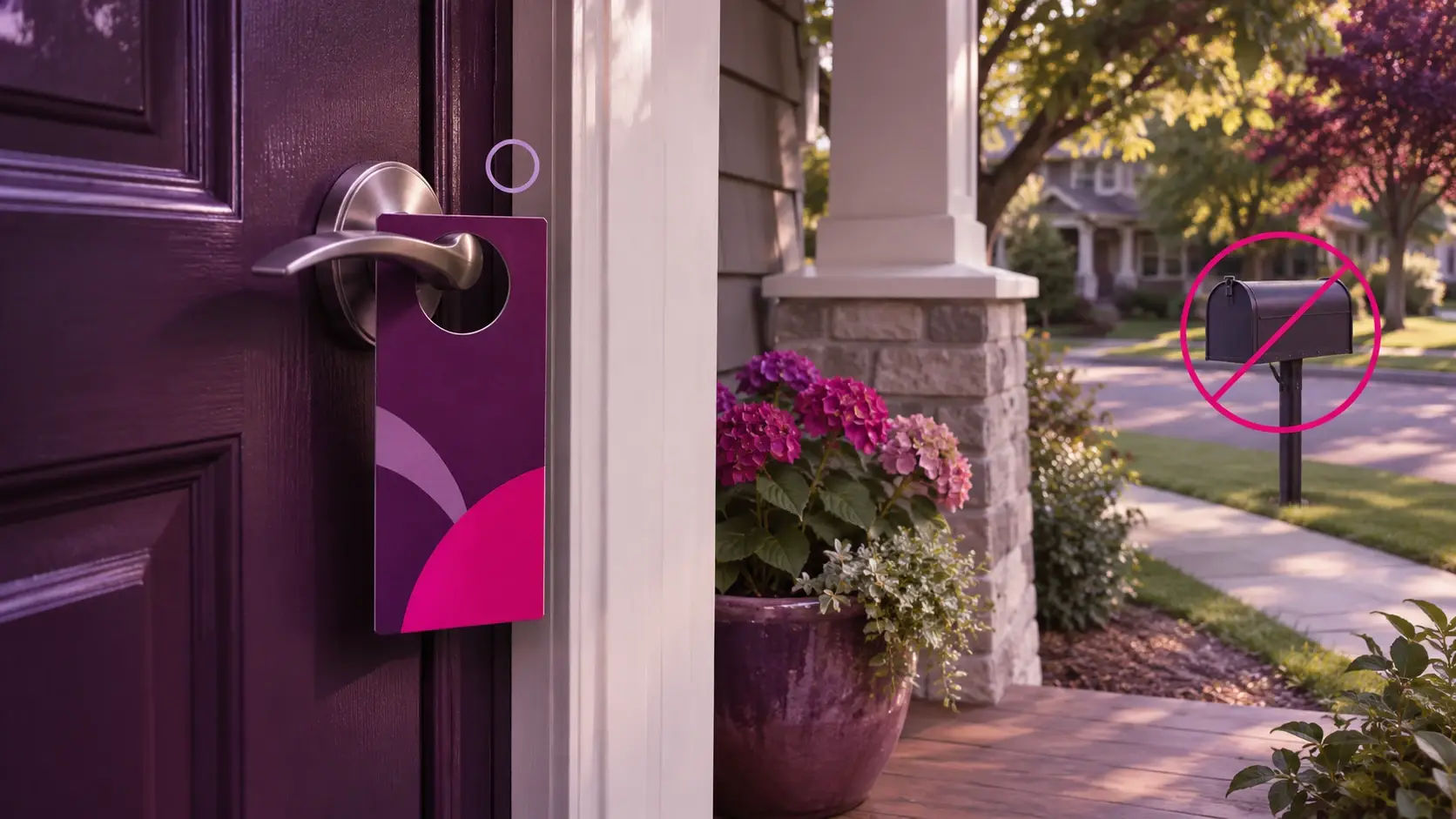
- Have a plan B. If yard signs aren’t allowed, use door hangers for the neighbors and a sign on your truck in the driveway.
Common areas in HOA neighborhoods, like the entrance, the mailbox kiosks and the park, belong to the association. Signs go there only with the HOA’s written OK.
Why sign rules can look so different from town to town
Two U.S. Supreme Court decisions shape how cities write sign rules:
- In Reed v. Town of Gilbert (2015), the Court ruled unanimously that a town’s sign code was unconstitutional because it treated signs differently based on what they said.
- In City of Austin v. Reagan National Advertising (2022), the Court held that cities can treat signs differently based on location, such as whether a sign advertises something on the property where it stands or somewhere else.
Since then, many cities have rewritten their sign codes around size, location, number and timing instead of message. That’s why one town limits “temporary signs” to 30 days and the next town over limits them by square footage. Your town’s current sign code is the one that counts.
The yard sign checklist
The bottom line
The roadside is the worst spot for a yard sign: it’s usually illegal, signs get pulled, and it looks cheap. The best spots are the ones people give you: customers’ lawns during and after a job, past customers on busy corners, your own property and your partners’. Ask first, stay out of the right-of-way, take signs down on time, and every sign you place works for you.
Want to make the most of those spots? Here are 25 yard sign marketing ideas that bring in calls.
Questions people ask
Can I put a business sign on the side of the road?
Usually not. The land along the road is generally public right-of-way, and many states and cities prohibit business signs there. Signs get removed, and some places fine you per sign. Maryland, for example, lets local governments collect up to $25 per commercial sign.
Can I put my company's sign in my customer's yard?
Generally yes, with the customer's permission, on their property (not the strip by the street). Many cities allow contractor signs only while the work is in progress or for a short time after, so check the local sign code and take the sign down on time.
How far from the road does a yard sign need to be?
It depends on the city. The public right-of-way often runs about 8 to 12 feet back from the curb, and sometimes all the way to the edge of the sidewalk or the property line. When in doubt, place the sign closer to the house than to the street, or ask the city for a right-of-way map.
Can an HOA ban contractor yard signs?
Often, yes. HOA rules are private agreements, and many restrict commercial signs even where the city allows them. Ask your customer to check the HOA's rules before you place a sign.
Can I put yard signs on utility poles or in medians?
No. Utility poles, medians, roadside ditches and highway shoulders are public or utility property. Signs there get pulled by road crews and code enforcement.
What are bandit signs?
Bandit signs are signs placed without permission, usually on roadsides, at intersections and on poles. They're illegal in most places, they're removed regularly, and they can make your business look like a fly-by-night.
Sources
- Unauthorized Signage in State Highway Right of Way, Maryland Department of Transportation State Highway Administration
- Wisconsin Statutes § 86.195 (signs within highway right-of-way)
- Temporary Signs, City of Livermore, California
- Temporary Signs in Residential, Town of Fountain Hills, Arizona
- Yard Signs Regulations, City of Lenexa, Kansas
- Sign Guidelines, Village of Hillside, Illinois
- Reed v. Town of Gilbert, 576 U.S. 155 (2015), First Amendment Encyclopedia
- City of Austin v. Reagan National Advertising of Austin, LLC (2022), SCOTUSblog case file